


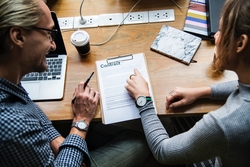
For Legal Secretaries and PAs, AI does not show up as some abstract legal research tool. It shows up in the everyday work of drafting letters, completing forms, and preparing documents that need to go out accurately. And this is exactly where AI's weaknesses become a real, practical problem: it can produce a document that looks flawless and still get the details wrong.
AI drafting tools are genuinely good at structure and tone. Give one a set of instructions and it will produce a letter, form, or document that reads fluently, follows the right format, and sounds entirely professional. What it is far less reliable at is getting every individual detail exactly right, and in legal work, the details are often the whole point.
A letter can be beautifully written and still contain incorrect information. These mistakes will not look out of place. The document will not flag that something might be off. It will simply present errors as fact, in the same confident tone as everything else.
Where this shows up in practice
Think about the kinds of documents that pass through a Legal Secretary's hands every day: client update letters, conveyancing correspondence, court forms, contracts. Many of these are now drafted with AI assistance, or generated through document automation platforms and smart templates that pull information from a set of prompts or existing records into a pre-built structure.
These tools are genuinely useful. They save time on repetitive drafting, keep formatting consistent, and reduce the burden of producing the same type of document over and over. But every one of them depends entirely on the accuracy of what goes in and what comes out. A smart template will populate a field exactly as instructed, whether the information behind it is correct or not. It has no way of knowing that a price has been misheard, a name misspelled, or a date entered the wrong way round. That is not the technology's job. It is the reviewer's.
Picture a routine update letter to a client in a conveyancing matter. It reads well, follows the firm's usual structure, and looks ready to send. But on a closer read, the purchase price quoted does not quite match the figure on file. The completion date differs from what was actually agreed. The postcode in the property address has digits in the wrong order. None of these would stop the letter looking professional. All of them could cause problems if they went out unchecked.
Why this matters more than ever
AI use in legal drafting has moved from novelty to normal. Recent industry research suggests a large and growing share of law firms now use AI tools for routine drafting and document preparation as standard practice. The Law Society has been equally clear that this comes with real risk, stressing that human oversight is not an optional extra when using AI in legal practice, and that the professional using the tool remains fully responsible for what goes out under the firm's name, regardless of how the first draft was produced. You can read their guidance on generative AI here.
That responsibility, in practice, often lands with the Legal Secretary or PA doing the final check. It is a role that has not changed, even though the tools have. Reading carefully, checking figures against the file, confirming names and addresses, and cross-referencing dates against instructions is exactly the same discipline that has always defined good legal support work. AI has not removed the need for it. If anything, it has made it more important, because the errors are now wrapped in a level of polish that can make them easy to miss.
A few habits worth building
Always check important details against the original source, rather than assuming they carried over correctly. Read slowly rather than skimming, since AI-generated text can read fluently even when something within it is wrong. Pay particular attention to anything that has been manually adjusted or entered as a variable, since this is often where errors creep in. And trust a second look. If something feels slightly off, even if you cannot immediately say why, it is worth pausing to check before the document goes any further.
None of this is about mistrusting AI as a tool. Used well, it can take a great deal of the repetitive burden out of drafting and form completion. But the accuracy of the finished document still rests with the person reviewing it, just as it always has.
If you would like to build these skills further, including how to review AI-assisted drafts and forms with confidence, ILSPA's AI in Legal Practice course covers this in depth, alongside the practical judgement Legal Secretaries and PAs need to use AI safely and effectively in day-to-day legal work.